Money
Money The Price Gap: How Much You Can Save With Walmart’s Great Value
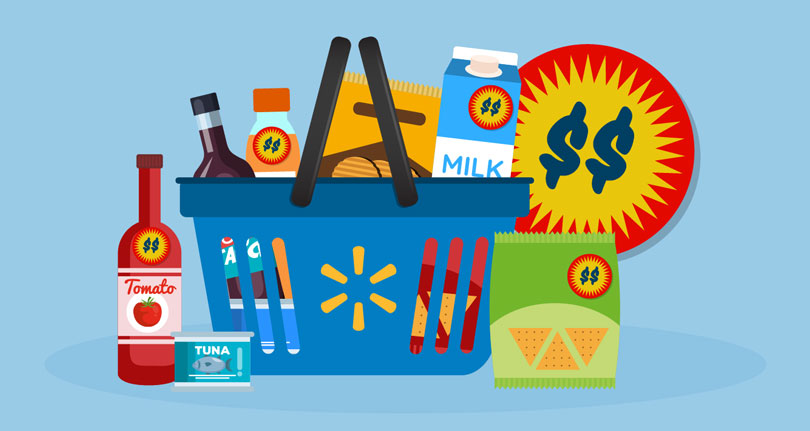

Walmart launched their own private label, Great Value in 1993 to offer shoppers high-quality groceries that were affordable. [1] The Takeout, 'The Major Name Brand Behind Walmart's Great Value Bread', 2026 https://www.thetakeout.com/2079373/brand-name-great-value-walmart-bread-sara-lee/ Alongside Great Value, Walmart owns several private brands including bettergoods, Marketside and Ol’ Roy, [2] The Takeout, 'Walmart Owns More Brands Than You Realize — Great Value Is Just The Start', 2026 https://www.thetakeout.com/2087813/walmart-owns-brands-more-great-value-explained/ but Great Value is still widely recognized for its savings. [3] Chowhound, 'Where Are Most Of Walmart's Great Value Food Products Made?', 2025 https://www.chowhound.com/1947490/where-are-walmart-great-value-food-products-made/
As the cost of everyday essentials continue to grow across the U.S., [4] U.S. Bureau of Labor Statistics, 'Consumer Price Index Summary', 2026 https://www.bls.gov/news.release/cpi.nr0.htm research conducted on behalf of Self Financial set out to discover the real cost of buying branded products over Walmart’s own private label Great Value items.
A private label brand is a product owned and sold by a retailer but usually manufactured by another company, and it is typically only available in that retailer’s stores. [5] Shopify, 'What Is a Private Label? How Private Labels Work (2026)', 2026 https://www.shopify.com/uk/blog/what-is-private-label For example, Great Value products are owned and sold by Walmart. On the other hand, a national brand is owned by a manufacturer and sold through many different retailers across the country. [6] All Business, 'Definition of national brand' https://www.allbusiness.com/dictionary-national-brand-4959205-1.html Examples include Coca-Cola, Nike, and Levi’s.
The study relied on an existing list of an average grocery shop based on a 2024 report by Drive Research and compared the price of nationally branded items with the equivalent Great Value product, ensuring the same volume or quantity was chosen for each product. Items were excluded from the study if they didn’t have a Great Value alternative, which was often the case for fruit and vegetables.
The results show the value of shopping strategically, and where you can make the biggest savings.
Key findings:
- Shoppers could save up to $2,405 per year by making swaps from national brands to Walmart’s Great Value products.
- The greatest price difference was found in eggs, where consumers saved $5.42 by swapping to Walmart’s Great Value alternative.
- This is followed by instant oatmeal packets ($4.70), butter ($4.39), and potato chips ($4.14) when comparing Walmart’s Great Value with national brands.
- Eggs also had the highest percentage difference in price (78.7%), followed by potato chips (73.4%), pasta (65.2%), and instant oatmeal packets (64%).
- Only chicken breasts and deli sliced meat were cheaper as branded products, with deli sliced ham showing the largest gap, where Great Value cost $0.33 more.
- Not only are Great Value products generally cheaper, they also often had the same or higher ratings than national brands, except for six out of the 20 products analyzed.
How much can be saved by buying Walmart’s Great Value products?
The research indicates that shoppers could achieve substantial savings by purchasing Walmart’s Great Value products instead of national brands. On average, consumers save almost $50 per grocery shop ($46.25) when switching exclusively to Great Value products.
A survey by Snipp in March 2025 found that 48% of respondents were grocery shopping weekly. [7] Snipp, 'How Inflation is Reshaping Grocery Shopping in 2025', 2025 https://www.snipp.com/hubfs/Snipp-Inflation-Grocery-Shopping-Shopper-Survey.pdf Using this as a basis, shoppers could save around $201 per month or $2,405 per year by making swaps from national brands to Walmart’s Great Value products.
Shoppers could save $2,405 per year by making swaps from national brands to Walmart’s Great Value products.
The greatest price difference was found in eggs, where consumers saved $5.42 by switching from national brands to Walmart’s Great Value alternative, representing a 78.7% reduction in price. Other items offering significant savings included instant oatmeal packets ($4.70), butter ($4.39), and potato chips ($4.14).
Eggs ($5.42), instant oatmeal packets ($4.70), butter ($4.39) and potato chips ($4.14) offer the highest savings in the study by swapping from national brands to Walmart’s Great Value products.
Out of the 20 grocery items analyzed, 18 were cheaper when bought as Great Value alternatives, highlighting the price advantage of private-label goods compared with branded equivalents.
| How much can shoppers save by swapping to Great Value products? | |
|---|---|
| Product | Savings |
| Eggs | $5.42 |
| Instant oatmeal packets | $4.70 |
| Butter | $4.39 |
| Potato chips | $4.14 |
| Milk | $4.04 |
| Olive oil | $4.04 |
| Yogurt | $2.76 |
| Pasta | $2.33 |
| White or brown rice | $2.16 |
| Orange juice | $2.16 |
| Breakfast cereal | $2.03 |
| Peanut butter | $1.95 |
| Bottled water | $1.40 |
| Crackers | $1.36 |
| Canned tomatoes | $1.25 |
| Pancake mix | $1.02 |
| Cheese | $0.97 |
| Cookies | $0.55 |
| Chicken breasts | -$0.09 |
| Deli sliced ham or turkey | -$0.33 |

Such savings are particularly relevant given ongoing volatility in global food prices. For example, the price of olive oil has experienced sustained fluctuations and upward pressure in recent years due to factors such as climate change, supply constraints, and rising production costs. In February 2026, it was reported that factors such as extreme weather, difficulty when harvesting, and strong global demand contributed to the increase in retail prices for olive oil. [8] Investopedia, 'Why Olive Oil Costs So Much', 2026 https://www.investopedia.com/why-olive-oil-costs-so-much-11899062
| Great Value vs branded product savings | |||||
|---|---|---|---|---|---|
| Rank | Product | Volume/Quantity | National brand price | Great Value price | Savings |
| Rank 1 | Product Eggs | Volume/Quantity 12 count | National brand price $6.89 | Great Value price $1.47 | Savings $5.42 |
| Rank 2 | Product Instant oatmeal packets | Volume/Quantity 1.76 oz, 6 count* | National brand price $7.34 | Great Value price $2.64 | Savings $4.70 |
| Rank 3 | Product Butter | Volume/Quantity 16 oz | National brand price $7.45 | Great Value price $3.06 | Savings $4.39 |
| Rank 4 | Product Potato chips | Volume/Quantity 8 oz | National brand price $5.64 | Great Value price $1.50 | Savings $4.14 |
| Rank 5 | Product Milk | Volume/Quantity 128 fl oz | National brand price $8.47 | Great Value price $4.43 | Savings $4.04 |
| Rank 6 | Product Olive oil | Volume/Quantity 16.9 fl oz | National brand price $11.21 | Great Value price $7.17 | Savings $4.04 |
| Rank 7 | Product Yogurt | Volume/Quantity 32 oz | National brand price $6.04 | Great Value price $3.28 | Savings $2.76 |
| Rank 8 | Product Pasta | Volume/Quantity 16 oz | National brand price $3.57 | Great Value price $1.24 | Savings $2.33 |
| Rank 9 | Product White or brown rice | Volume/Quantity 2lb | National brand price $3.93 | Great Value price $1.77 | Savings $2.16 |
| Rank 10 | Product Orange juice | Volume/Quantity 89 fl oz | National brand price $7.63 | Great Value price $5.47 | Savings $2.16 |
| Rank 11 | Product Breakfast cereal | Volume/Quantity 12 oz | National brand price $4.81 | Great Value price $2.78 | Savings $2.03 |
| Rank 12 | Product Peanut butter | Volume/Quantity 16 oz | National brand price $3.93 | Great Value price $1.98 | Savings $1.95 |
| Rank 13 | Product Bottled water | Volume/Quantity 1 gallon | National brand price $2.77 | Great Value price $1.37 | Savings $1.40 |
| Rank 14 | Product Crackers | Volume/Quantity 13.7 oz | National brand price $3.90 | Great Value price $2.54 | Savings $1.36 |
| Rank 15 | Product Canned tomatoes | Volume/Quantity 28 oz | National brand price $2.77 | Great Value price $1.52 | Savings $1.25 |
| Rank 16 | Product Pancake mix | Volume/Quantity 32 oz | National brand price $3.00 | Great Value price $1.98 | Savings $1.02 |
| Rank 17 | Product Cheese | Volume/Quantity 8 oz | National brand price $2.94 | Great Value price $1.97 | Savings $0.97 |
| Rank 18 | Product Cookies | Volume/Quantity 10 oz | National brand price $4.51 | Great Value price $3.96 | Savings $0.55 |
*Data note: The closest comparable Great Value alternative was a product sized 1.83 oz, 6-count.
Which products have the highest percentage price difference?
The study also examined which grocery items exhibited the largest percentage price differences between nationally branded products and Walmart’s Great Value alternatives. The results showed that eggs not only had the largest price difference but also the highest percentage difference, at 78.7%. This was followed by potato chips (73.4%), pasta (65.2%), and instant oatmeal packets (64%).
| Percentage price difference per product | |
|---|---|
| Product | Percentage price difference |
| Eggs | 78.7% |
| Potato chips | 73.4% |
| Pasta | 65.2% |
| Instant oatmeal packets | 64% |
| Butter | 58.9% |
| White or brown rice | 55% |
| Bottled water | 50.5% |
| Peanut butter | 49.7% |
| Milk | 47.7% |
| Yogurt | 45.7% |
| Canned tomatoes | 45.1% |
| Breakfast cereal | 42.2% |
| Olive oil | 36% |
| Crackers | 34.9% |
| Pancake mix | 34% |
| Cheese | 33.1% |
| Orange juice | 28.3% |
| Cookies | 12.3% |
| Chicken breasts | -1% |
| Deli sliced ham or turkey | -5.8% |
Eggs (78.7%), potato chips (73.4%), pasta (65.2%) and instant oatmeal packets (64%) show the highest percentage of price difference.
In contrast, the product with the lowest percentage price difference was cookies (12.3%), which also generated the smallest savings for consumers. This was followed by orange juice (28.3%) and cheese (33.1%).
Which Great Value products are more expensive than national brands?
The research revealed that only two products were cheaper when purchasing nationally branded options rather than Great Value alternatives, indicating that Great Value products generally provided better value across most items in the shopping cart.
| Which Great Value products are more expensive than national brands? | |||
|---|---|---|---|
| Product | Volume | Average national brand price | Great Value price |
| Chicken breasts | 22 oz | $8.89 | $8.98 |
| Deli sliced ham or turkey | 16 oz | $5.64 | $5.97 |
Chicken breasts and deli sliced ham or turkey were the only items that were cheaper when purchasing nationally branded products instead of Great Value alternatives. Between these, deli sliced meat showed the largest price gap, with the Great Value option costing $0.33 more than the branded equivalent, making it the most significant exception to the overall cost-saving trend of private-label products.
| Unbranded vs branded product savings | ||||
|---|---|---|---|---|
| Product | Non Walmart brand price | Great Value price | Savings | Percentage price difference |
| Chicken breasts | Non Walmart brand price $8.89 | Great Value price $8.98 | Savings -$0.09 | Percentage price difference -1% |
| Deli sliced ham or turkey | Non Walmart brand price $5.64 | Great Value price $5.97 | Savings -$0.33 | Percentage price difference -5.8% |
Shopper’s favorite products: Great Value vs national brands
In addition to analyzing prices, the study also explored which Great Value products were most popular among American consumers by examining the average customer ratings for each item. This provided insight into not only which products were cheapest, but also which were most positively received by shoppers.
| Average customer rating of branded vs Great Value products | ||
|---|---|---|
| Product | National brand rating | Great Value rating |
| Butter | 4.8 | 4.8 |
| Cheese | 4.7 | 4.8 |
| Cookies | 4.8 | 4.8 |
| Bottled water | 4.6 | 4.7 |
| Breakfast cereal | 4.6 | 4.7 |
| Canned tomatoes | 4.5 | 4.7 |
| Deli sliced ham or turkey | 4.6 | 4.7 |
| Pancake mix | 4.7 | 4.7 |
| Pasta | 4.6 | 4.7 |
| Peanut butter | 4.5 | 4.7 |
| White or brown rice | 4.6 | 4.7 |
| Yogurt | 4.7 | 4.7 |
| Crackers | 4.6 | 4.6 |
| Milk | 4.6 | 4.6 |
| Olive oil | 4.7 | 4.6 |
| Orange juice | 4.7 | 4.6 |
| Potato chips | 4.7 | 4.6 |
| Eggs | 4.7 | 4.5 |
| Chicken breasts | 4.6 | 4.4 |
| Instant oatmeal packets | 4.5 | 3.8 |
The analysis shows that not only are Great Value products generally cheaper than branded alternatives, they were also often rated the same or higher by consumers. The exceptions to this were olive oil, orange juice, potato chips, eggs, chicken breasts and instant oatmeal packets.
Only six Great Value products were beaten by national brands in reviews: olive oil (4.7), orange juice (4.7), potato chips (4.7), eggs (4.7), chicken breasts (4.6) and instant oatmeal packets (4.5).
Alongside this, global retail studies have found that consumer perceptions of private label products have improved significantly, with 68% viewing them as a good alternative to branded products and 69% recognizing them as good value. [9] NielsenIQ, 'NIQ’s Global Report Reveals Challenges and Opportunities for Private Label and Branded Product Growth', 2025 https://nielseniq.com/global/en/news-center/2025/niqs-global-report-reveals-challenges-and-opportunities-for-private-label-and-branded-product-growth/
Methodology
The products included in this study are representative of an average household grocery shop and are based on a 2024 report by Drive Research. Using this as a foundation, the study created a grocery basket of 30 commonly purchased items. The study removed products that did not have at least three comparable products, or did not offer Great Value alternatives. This included apples, carrots, croissants or pastries, frozen vegetables, potatoes, salad kits, shampoo and bananas. After removing these products, the study had a total of 20 products for analysis.
| Product | Normalized Size |
|---|---|
| Bottled water | 1 gallon |
| Breakfast cereal | 12 oz |
| Butter | 16 oz |
| Canned tomatoes | 28 oz |
| Cheese | 8 oz |
| Chicken breasts | 22 oz |
| Cookies | 10 oz |
| Crackers | 13.7 oz |
| Deli sliced ham or turkey | 16 oz |
| Eggs | 12 count |
| Instant oatmeal packets* | 1.76 oz, 6 count |
| Milk | 128 fl oz |
| Olive oil | 16.9 fl oz |
| Orange juice** | 89 fl oz |
| Pancake mix | 32 oz |
| Pasta | 16 oz |
| Peanut butter | 16 oz |
| Potato chips | 8 oz |
| White or brown rice | 2lb |
| Yogurt | 32 oz |
*Great Value product measured 1.83 oz, 6 count as the closest comparison available.
**Only two national brand orange juice products were available for comparison.
Walmart was used as the sole retailer to ensure pricing consistency. Pricing was collected using Walmart’s website in July 2026, set to a location in the most populated area of the United States (07731) to reflect pricing in a major consumer market.
All prices were taken from live listings at the time of data collection.
Comparison Approach
- Brand Selection
For each product category, three branded items listed on Walmart’s website were identified. The prices of these products were averaged to produce a representative branded price for each category.
- Private-Label Comparison
For each category, the equivalent Great Value (Walmart’s private-label) product was identified, and its price was recorded for direct comparison.
- Price Averaging
Branded average price = (Brand 1 + Brand 2 + Brand 3) ÷ 3.
This branded average was compared directly against the price of the Great Value product.
To ensure a fair comparison, where possible, products were matched by size, volume (mL/L), weight, and quantity. The only exceptions were instant oatmeal packets, for which the closest available Great Value product was 1.83 oz (6 count), and national brand orange juice products, for which only two exact size matches were available.
Analysis
The final analysis compared the average branded price with the Great Value price across the 20 product categories to assess cost differences between branded and private-label grocery items.
Sources
- [1] The Takeout, 'The Major Name Brand Behind Walmart's Great Value Bread', 2026 https://www.thetakeout.com/2079373/brand-name-great-value-walmart-bread-sara-lee/
- [2] The Takeout, 'Walmart Owns More Brands Than You Realize — Great Value Is Just The Start', 2026 https://www.thetakeout.com/2087813/walmart-owns-brands-more-great-value-explained/
- [3] Chowhound, 'Where Are Most Of Walmart's Great Value Food Products Made?', 2025 https://www.chowhound.com/1947490/where-are-walmart-great-value-food-products-made/
- [4] U.S. Bureau of Labor Statistics, 'Consumer Price Index Summary', 2026 https://www.bls.gov/news.release/cpi.nr0.htm
- [5] Shopify, 'What Is a Private Label? How Private Labels Work (2026)', 2026 https://www.shopify.com/uk/blog/what-is-private-label
- [6] All Business, 'Definition of national brand' https://www.allbusiness.com/dictionary-national-brand-4959205-1.html
- [7] Snipp, 'How Inflation is Reshaping Grocery Shopping in 2025', 2025 https://www.snipp.com/hubfs/Snipp-Inflation-Grocery-Shopping-Shopper-Survey.pdf
- [8] Investopedia, 'Why Olive Oil Costs So Much', 2026 https://www.investopedia.com/why-olive-oil-costs-so-much-11899062
- [9] NielsenIQ, 'NIQ’s Global Report Reveals Challenges and Opportunities for Private Label and Branded Product Growth', 2025 https://nielseniq.com/global/en/news-center/2025/niqs-global-report-reveals-challenges-and-opportunities-for-private-label-and-branded-product-growth/