Back to articles
How to Sell a Car With Negative Equity
If you owe more on your car loan than the car is currently worth, you may still have options. Selling a car with negative equity is possible, but it takes a bit more planning than a standard sale. You'll need to know your numbers, understand your options, and be prepared to cover any shortfall between what the car sells for and what you still owe on the loan.
In this article, we explain what negative equity is and what causes it, outline your main options for selling, and walk you through the steps involved in completing the sale.
Key points
- Negative equity on a car loan means you owe more than the car is currently worth, often caused by a long loan term, a small down payment, or financing extra costs
- It is possible to sell a car with negative equity, but you may need to cover the difference between the sale price and your loan balance before ownership can transfer
- You have several options: selling privately usually gets the highest price, online buyers can offer speed and convenience, and trading in at a dealership is likely the easiest route but can leave you underwater on your next loan
What is negative equity on a car loan?
Negative equity on a car loan means you owe more on your loan than your car is currently worth. With a secured debt like an auto loan, equity is the difference between your loan balance and the value of the vehicle you're using as collateral. When that figure goes negative, you're what’s known as "underwater" on your loan, which means it’s in negative equity. [1]
Common causes of negative equity
Several factors can contribute to negative equity on an auto loan, including:
- A long loan term: The longer your repayment period, the more slowly you pay down your loan. If your vehicle depreciates faster than you reduce your balance, you can end up underwater. If you have a lower credit score you may have limited options and be more likely to take a longer term.
- A small or no down payment: The less you put down upfront, the more likely you are to have negative equity as the car loses value, especially with new cars, which depreciate quickly in the first few years.
- Financing extra costs: Some lenders allow you to borrow more than the vehicle's sale price to cover taxes, fees and dealer add-ons. This can mean you start out with negative equity before you've even driven away. [1]
Your options for selling a car with negative equity
- Sell privately: Usually gets you the highest price, which helps close the gap between what you owe and what the car is worth. You’ll need to pay off the amount you owe on your loan before being able to sell privately. [2]
- Sell to an online buyer: Services like Carvana and CarMax make the process convenient, but their offers tend to be lower than a private sale. If you're deeply underwater, some may require you to cover the shortfall upfront or may decline to buy altogether. [2]
- Trade in at a dealership: Likely the most convenient route if you need a replacement vehicle. If you owe more than the estimated trade-in value, a dealer may offer to roll your existing balance into a new loan, which will increase your total loan costs and the interest you pay over the life of the loan. [3]
Steps to selling a car with negative equity
It’s possible to sell a car with negative equity, but the amount owed on the loan will need to be paid off before you can transfer title to the new owner. [4]
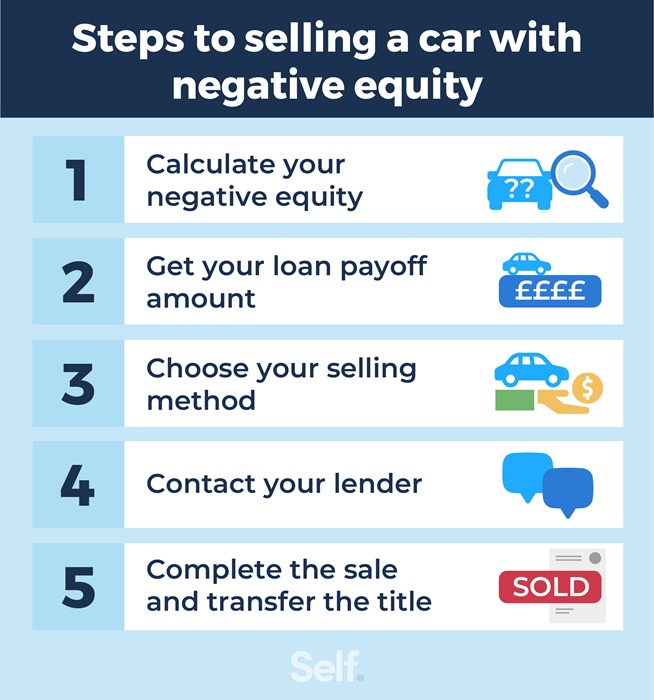
Step 1: Calculate your negative equity
Before selling a car with negative equity, you need a realistic figure for what your car would actually sell for today, not what you paid for it or what you think it's worth.
You can get a good idea of its value at Kelley Blue Book and Edmunds. Both sites let you enter the model, year, mileage, options and condition to generate an estimate. You may also be able to get an idea of what comparable vehicles are selling for locally by pricing them at CarMax. [4]
CarEdge recommends going one step further and getting an in-person appraisal at CarMax rather than relying on online estimates alone. They advise adding $2,000 to $2,500 to the written CarMax offer when pricing your car for a private sale [2], the reasoning being that CarMax, like other instant buyers, prices conservatively to account for reconditioning costs and resale margin. A private buyer doesn't carry those costs, so the market will typically bear a higher price.
Step 2: Get your loan payoff amount
You'll also need to know your loan payoff amount. This is the total amount required to pay off your auto loan in full, it may be different from the outstanding balance on your statement due to the way interest is calculated, any outstanding late fees or charges, or for other reasons. [3]
Knowing your payoff amount can help you determine whether the proceeds from selling your vehicle will cover the remaining balance or whether you'll need to pay the difference. [4]
Step 3: Choose your selling method
There are three main routes when selling a car with negative equity: selling privately, trading in at a dealership, or selling to an online buyer.
Once you know your vehicle's value and loan payoff amount, you can decide how to sell the car. If you have negative equity, the method you choose can affect how much you'll need to pay out of pocket to satisfy the loan. [5]
A private sale may help you get the highest price for your vehicle, which could reduce the amount of negative equity you need to cover. However, you'll need to work directly with your lender and the buyer to ensure the loan is paid off and ownership is transferred correctly. [4]
Step 4: Contact your lender
Contact your lender before arranging a sale, because the lender holds a lien on the vehicle until the loan is paid off, the loan balance must typically be settled before ownership can be transferred to a new buyer. Each lender may have a different process for selling a financed vehicle. Some banks and credit unions may require the buyer to complete the transaction at a local branch so the loan can be paid off and the lien released, allowing you to transfer the title once you’re ready. [6]
Asking about the lender's requirements early can help you avoid delays when it's time to complete the sale and transfer the title.
Step 5: Complete the sale and transfer the title
Once you've found a buyer and agreed on a sale price, you'll need to settle any remaining negative equity. If the vehicle sells for less than the loan payoff amount, you'll need to pay the difference so the loan can be paid in full. After the loan has been satisfied and the lien released, ownership can be transferred to the new buyer. [6]
How to trade in a car with negative equity
Trading in a car with negative equity is straightforward in practice, but it comes with a financial risk worth understanding before you commit.
When you trade in, the dealer will appraise your car and apply its value toward your next purchase. If you owe more than the car is worth, the dealer will typically offer to roll the difference into your new loan. This means you start your next loan already in negative equity, and you will pay interest on that rolled-over amount for the life of the loan. [3]
Before heading to a dealership, research the value using Consumer Reports, Edmunds, Kelley Blue Book, and NADA, so you know what your car is actually worth. [3] This gives you a baseline and helps stop dealers from undervaluing your trade-in. CarEdge recommends negotiating the price of your new vehicle first and only then bringing your trade-in into the conversation, to keep the two deals separate. [2]
If a dealer offers to pay off your negative equity as part of the deal, the CFPB advises reading the final loan contract carefully to make sure that amount has not simply been folded into your new financing. Once the deal is done, contact your old lender directly after about a week to confirm the previous loan has been fully paid off. [2]
The bottom line
Selling a car with negative equity is more complicated than a standard sale, but it is doable. The most important thing is to go in with a clear picture of your finances: what the car is actually worth, what you still owe, and how you will handle any shortfall.
After the sale, don't assume the loan has been settled. Check your credit reports to confirm the balance has been updated to zero, which should happen within 30 to 60 days. You can pull all three reports for free at annualcreditreport.com. If the balance is still showing after that point, raise a dispute with the relevant credit reporting agency. [6] The CFPB also recommends contacting the lender and if that doesn’t resolve the issue, you can make an official complaint. [3]
Sources
- Experian. "What Is Negative Equity?" https://www.experian.com/blogs/ask-experian/what-is-negative-equity/. Accessed July 02, 2026.
- CarEdge. "How to Get Rid of a Car With Negative Equity." https://caredge.com/guides/how-to-get-rid-of-a-car-with-negative-equity. Accessed July 02, 2026.
- Consumer Financial Protection Bureau. "Should I Trade in My Car if It's Not Paid Off?" https://www.consumerfinance.gov/ask-cfpb/should-i-trade-in-my-car-if-its-not-paid-off-en-2045/. Accessed July 02, 2026.
- Experian. "How to Sell a Car That Isn't Paid Off." https://www.experian.com/blogs/ask-experian/sell-car-if-it-isnt-paid-off/. Accessed July 02, 2026.
- Consumer Financial Protection Bureau. "Auto Loans." https://www.consumerfinance.gov/consumer-tools/auto-loans/. Accessed July 02, 2026.
- Capital One. "How to Sell a Financed Car You Still Owe Money On." https://www.capitalone.com/cars/learn/managing-your-money-wisely/how-to-sell-a-financed-car-you-still-owe-money-on/1478. Accessed July 02, 2026.
About the author
Becca has over 10 years of experience as a content writer, working across various industries including finance, digital marketing, education, travel, and technology. Her work has been featured in publications including Forbes, Business Insider, AOL, Yahoo, GOBankingRates, and more.